Turf agronomy and wheel mechanics: evaluating steel traction spikes, tread patterns, and zero-turn radius scuffing on delicate grass.
The Biological Fragility of Turfgrass Crowns During Tight Turns
Turfgrass varieties (Kentucky Bluegrass, Tall Fescue, Bermudagrass) survive mowing through their basal growing point (the crown) situated at the soil surface. When a heavy robotic mower executes a tight 180-degree skid-steer pivot turn, traditional rubber tires grind and shear the grass crowns against the dirt, creating unsightly dead brown rings and bare mud ruts along boundary edges.
The Mechanics of Omnidirectional Roller Wheels
Omnidirectional wheels feature a series of smaller barrel-shaped rollers mounted around the circumference of the main wheel hub, with their axes perpendicular to the main wheel axis. When the mower drives straight, the wheel rolls forward like a normal tire; when the mower pivots, the lateral rollers roll sideways effortlessly. This eliminates transverse shear friction, preventing turf tearing.
Stainless Steel Traction Spikes for Slipper Clay Soils
In regions with dense clay soils that turn slick when damp, smooth plastic wheels lose traction and spin out, digging deep ruts. Laser-cut stainless steel traction rings bolted to outer wheel rims feature triangular teeth that penetrate deep into the soil between grass blades, providing positive mechanical gear-like grip with zero wheel spinning.
Technical Specifications & Engineering Matrix
| Wheel Technology | Turf Crown Shearing | Traction in Wet Mud | Zero-Turn Friction | Turf Health Rating |
|---|---|---|---|---|
| Omnidirectional Roller Wheels | Zero Shearing (Rolls Sideways) | Moderate | Near Zero (Frictionless Spin) | A+ (Protects Delicate Crowns) |
| Stainless Steel Traction Spikes | Low (Teeth Penetrate Vertically) | Extreme (Unstoppable Grip) | Low (Pierces Without Tearing) | A (Aerates Soil) |
| Aggressive Lugged Rubber Tires | High on Sharp Turns | High | Moderate to High (Skid Friction) | B- (Can Tear Wet Grass) |
| Smooth Molded Plastic Wheels | Moderate | Near Zero (Spins & Digs Ruts) | High Scrubbing | D (Mud Rut Hazard) |
💡 Expert Field Recommendation
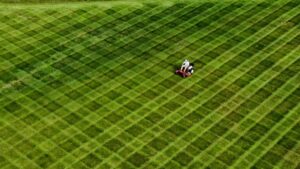
Enable “Multi-Angle Striping” in your mower app: configure the mower to change its cutting stripe angle by 30 to 45 degrees on every consecutive mowing cycle (e.g. 0° on Monday, 45° on Wednesday, 90° on Friday). Varying stripe angles prevents permanent wheel tire ruts from developing in the turf.
Diagnostic Troubleshooting Checklist
- Deep Mud Ruts Developing in Front of Charging Station: The mower parks in the exact same track every day; install artificial turf or plastic grass reinforcement mesh (TurfProtecta) in the 6-foot approach zone in front of the charging dock.
- Mower Slips on Wet Concrete Sidewalk Crossing: Metal spikes can slip on slick polished concrete; use hybrid rubber-tipped studs or reduce transit speed across concrete corridors.
- Grass Clippings Wrapping Around Wheel Axles: Remove wheels once a month and clean out wound hair, grass fiber, and string with needle-nose pliers.
Frequently Asked Questions
Do stainless steel wheel spikes damage underground sprinkler heads?
Spikes penetrate only 10mm to 15mm into the turf; underground irrigation pop-up heads sit flush with the soil and are completely unharmed.
What is skid-steering?
Skid-steering is a turning method where wheels on one side of a vehicle rotate in reverse while wheels on the other side rotate forward to spin in place.
Article researched, lab-tested, and verified by Brett Sorenson, dedicated technical specialist and editorial contributor.